Canada’s Clean Technology Investment Tax Credit (ITC): Why Buying an Electric Forklift Now Can Pay Off
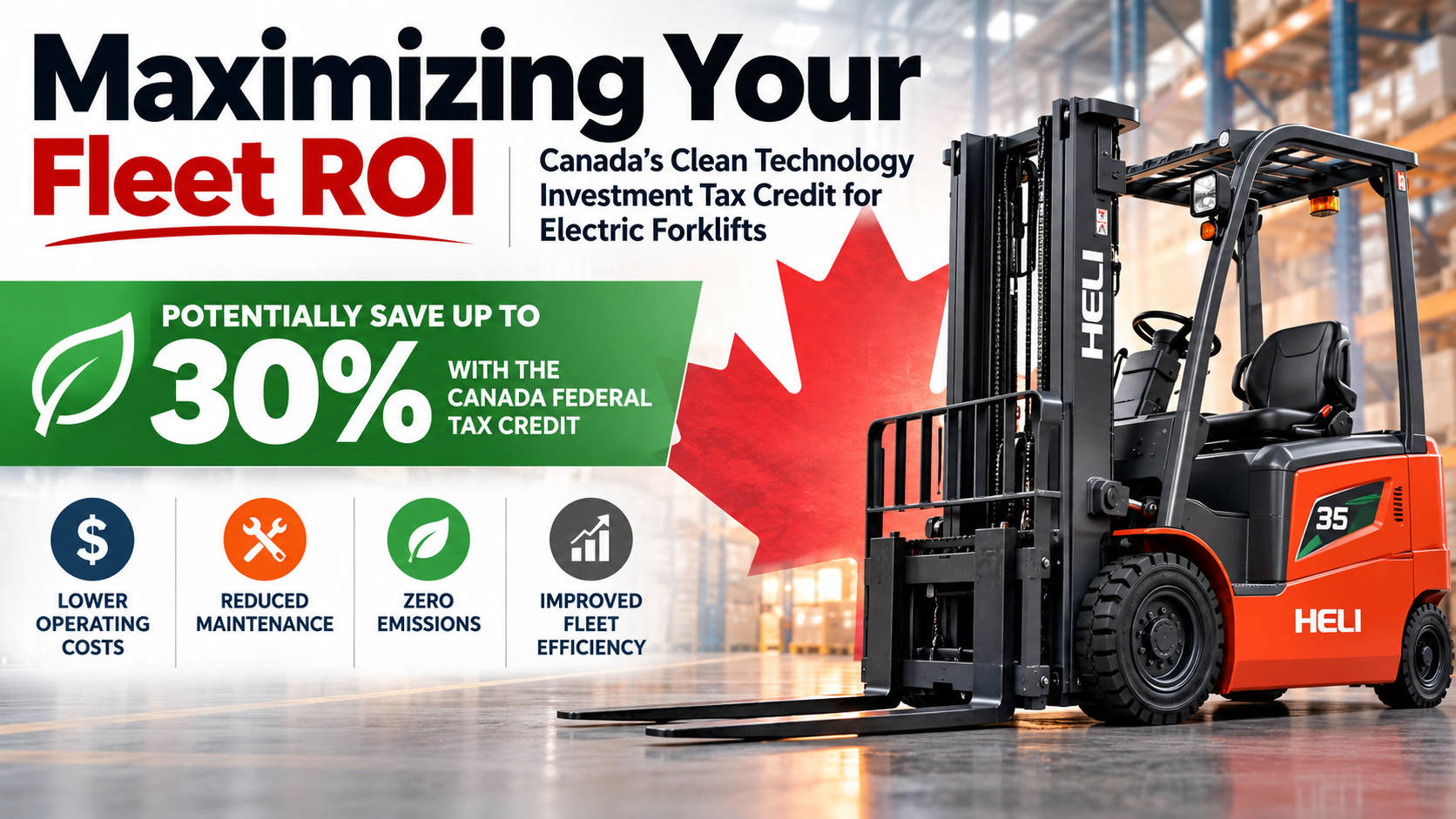
Canadian warehouses, manufacturers, and logistics operators are under growing pressure to cut operating costs, reduce emissions, and improve workplace safety. One of the most practical ways to act quickly is fleet electrification—starting with forklifts, pallet trucks, and other material-handling equipment that run daily and consume significant fuel.
At the same time, the federal government’s Clean Technology Investment Tax Credit is designed to accelerate investment in clean technologies by lowering after-tax capital costs. While the credit is not “an electric forklift rebate” on its own, it can materially improve the economics of going electric—especially when your forklift purchase is paired with facility upgrades such as charging infrastructure, electrical improvements, or on-site clean power.
What Is the Federal Clean Technology Investment Tax Credit?
The Clean Technology Investment Tax Credit (Clean Technology ITC) is a federal, refundable tax credit intended to encourage Canadian businesses to invest in eligible clean technology property. In practical terms, a refundable ITC can put cash back into your project economics—reducing the net cost of qualifying investments and improving payback periods.
Key points to understand:
- It is an investment tax credit tied to qualifying capital expenditures (not day-to-day operating costs).
- Refundable generally means it can provide value even if your tax payable is limited in the year of the claim (subject to program rules and your situation).
- Rates and timelines may phase down over time, which is one reason many organizations are moving sooner rather than later.
- Labour requirements may apply to access the maximum credit rate on certain projects, depending on the final rules and how the work is performed.
Eligible property generally includes specific clean electricity and low-carbon technology equipment (for example, equipment related to clean power generation and energy storage). Because eligibility depends on technical definitions and “available for use” timing, businesses should confirm how the Clean Technology ITC applies to their particular project components.
How the Clean Technology ITC Can Support Electric Forklift Projects
Many forklift electrification projects are not just about the vehicle. They often require supporting infrastructure to ensure reliable charging, avoid peak-demand surprises, and keep operations running smoothly across shifts.
Depending on your facility and scope, the Clean Technology ITC may support portions of a broader electrification plan, such as:
- On-site clean power and storage (e.g., solar plus battery storage) to offset electricity consumption and improve energy resilience
- Electrical system upgrades that are part of enabling clean technology equipment (eligibility depends on detailed rules and how costs are categorized)
- Energy storage solutions that help manage charging loads and reduce peak demand charges
Important: Whether an electric forklift itself qualifies under the Clean Technology ITC depends on how the equipment is classified under the program’s definitions. Many businesses still benefit significantly because the infrastructure around electrification—especially storage and clean electricity assets—may be eligible and can materially reduce the total project cost.
Why It’s Beneficial to Buy an Electric Forklift Now
Even before incentives, electric forklifts can deliver measurable operational advantages. When incentives and tax measures are layered in (federal and provincial programs, plus potential accelerated depreciation where applicable), the business case often strengthens further.
Here are the most common drivers:
1) Lower “fuel” cost per operating hour
Electricity is typically a lower-cost energy source than propane or diesel on a per-hour basis for indoor material handling, particularly when equipment runs multiple shifts.
2) Reduced maintenance and downtime
Electric drivetrains tend to require less routine maintenance than internal combustion units—no oil changes, fewer filters, and fewer engine-related wear items. Reduced downtime improves throughput and reduces disruption during peak periods.
3) Improved indoor air quality and compliance
Zero tailpipe emissions inside the facility can reduce ventilation needs in some environments, improve worker comfort, and help meet internal ESG goals and customer expectations.
4) More predictable operations across shifts
With the right charging strategy (opportunity charging, battery management, or battery swap depending on your setup), electric fleets can be easier to schedule than managing fuel cylinder logistics.
5) Better long-term planning amid carbon and fuel price volatility
Propane and diesel pricing can fluctuate. Electrification can reduce exposure to fuel volatility and carbon-related cost pressure over time.
Cost-Saving Examples: Propane vs. Electric Forklift
The numbers below are illustrative examples. Your results will vary by duty cycle, load weight, lift height, facility temperature, battery type, electricity rates, and propane contract pricing. However, they show why many operators see rapid payback.
Example 1: Single Forklift Running One Shift
Assumptions:
- Usage: 2,000 operating hours/year
- Propane forklift fuel cost: $4.25/hour (typical cylinder cost divided by run time, varies widely)
- Electric forklift energy use: 6 kWh/hour
- Electricity rate: $0.15/kWh
Estimated annual energy cost:
- Propane: 2,000 × $4.25 = $8,500/year
- Electric: 2,000 × (6 × $0.15) = 2,000 × $0.90 = $1,800/year
Estimated annual “fuel” savings: $6,700/year
Now add maintenance. If the propane unit costs even $600–$1,200/year more in routine service and wear items, total savings can reach $7,300–$7,900 per year for a single truck in steady use.
Example 2: Five-Forklift Fleet (One Facility)
Using the same assumptions, energy savings alone can be approximately:
- 5 × $6,700 = $33,500/year in energy savings
Add conservative maintenance savings of $800/year per truck:
- 5 × $800 = $4,000/year
Estimated combined savings: $37,500/year
Example 3: Reducing “Hidden Costs” from Cylinder Changes and Downtime
If a propane forklift requires cylinder change-outs that cause just 10 minutes of downtime per day, that’s about 40 hours/year (based on ~240 working days). At an internal labor and disruption cost of $60/hour, that is roughly $2,400/year in productivity impact—before considering safety and handling time. Electric fleets can reduce or eliminate that specific interruption when charging is planned effectively.
How to Maximize Savings and Incentives When Switching to Electric Forklifts
To capture the full value of electrification—and position your project to benefit from federal tax incentives—take a project-based approach rather than treating the forklift as a standalone purchase.
- Assess your duty cycle (hours, loads, lift heights, freezer/cold storage needs) to size the right battery and charging approach.
- Plan charging infrastructure with room to scale. Even one forklift can trigger electrical considerations; a fleet can affect demand charges and panel capacity.
- Evaluate on-site power and storage if you want to reduce energy cost exposure and improve resiliency—areas where federal tax credits may be relevant.
- Coordinate purchase and “available for use” timing so capital assets and infrastructure are placed in service in the most advantageous period.
- Confirm tax treatment with a qualified tax professional, including Clean Technology ITC eligibility for project components and any accelerated depreciation options that may apply.
Bottom Line: Electrification Is a Near-Term Cost Strategy—Not Just a Sustainability Move
For many Canadian operations, buying an electric forklift is one of the fastest, most operationally grounded steps toward lower costs and reduced emissions. When paired with smart charging design and potential federal support through programs like the Clean Technology Investment Tax Credit, electrification projects can deliver stronger returns and improved budget certainty.
If you are considering a purchase, the most effective next step is to build a simple business case: baseline your current propane or diesel costs, estimate electric consumption by duty cycle, and identify any facility upgrades required. From there, you can determine which components may qualify for federal incentives and move forward with clearer payback and lower risk.
Get in touch with NovaLift Equipment to get more information and learn more about our HELI Lithium Powered Forklifts. As an Authorized HELI Forklift Dealer, you are in the right hands.
Contact us Today - 416-661-6262